Why Smart US Founders Are Making Kobe Their First Hire — Not San Francisco

Let's be honest about what hiring your first full-time employee in a major US tech hub actually looks like right now. You're competing against companies with eight-figure war chests for engineers who already have three competing offers. You're paying San Francisco or New York salaries before you've found product-market fit. And you're doing all of it while trying to keep burn rate low enough to survive the next 18 months.
A small but growing cohort of US founders is opting out of that race entirely. Instead of their first hire being a $140K-a-year engineer in Austin or a $160K product manager in New York, they're building their initial teams in Kobe, Japan — and the results are making other bootstrapped founders pay attention.
The Math That Changes Everything
The cost-per-hire conversation usually starts with salary, but the real savings run deeper than that. Competitive engineering salaries in Kobe for mid-level talent with strong English skills typically run between $45,000 and $70,000 USD equivalent — and that's before you factor in Japan's comparatively straightforward employment tax structure for small businesses.
For a bootstrapped company operating on $500K or less in initial capital, that difference isn't just a line item. It's the difference between affording two hires or five. It's the difference between a runway of 14 months and one that stretches to two-plus years. That kind of breathing room changes how you make decisions, how aggressively you can iterate, and frankly, whether your company survives its first winter.
One founder of a B2B SaaS platform — who asked to remain anonymous but has been operating out of Kobe for going on three years — put it plainly: "My first two hires here cost me what one mid-level engineer in Denver would have. I had a full product team before I had a single US customer."
Bilingual Talent as a Competitive Moat
Kobe has a specific advantage that most people outside Japan don't fully appreciate: it has a disproportionately high concentration of bilingual professionals compared to many other Japanese cities. This isn't accidental. Kobe has been an international port city for over 150 years, and that history created an unusually cosmopolitan local culture. The city is home to a large expat community, multiple international schools, and a business culture that has always had one foot pointed outward.
For US startups with any interest in Asia-Pacific markets — or even for those who just want someone who can interface fluently with Japanese vendors, logistics partners, or enterprise clients — this matters enormously. You're not hiring a translator as a separate function. You're hiring a product manager or a growth hire who also happens to be fluent in Japanese, understands both business cultures, and can run a client call in either language without breaking a sweat.
That's a skillset that would cost a premium in the US. In Kobe, it's relatively common.
The Time Zone Coverage Nobody Talks About
Here's the thing about Kobe being 13 to 16 hours ahead of US time zones, depending on where you're based: it sounds like a problem until you realize it's actually a superpower for certain business models.
If you're running a product with any kind of customer support component, having a team member in Kobe means your customers get human responses during hours when most US-only companies are completely dark. Your Kobe-based hire starts their workday just as the US East Coast is wrapping up — which means your product is effectively staffed nearly around the clock without anyone working miserable overnight shifts.
For SaaS companies with enterprise clients, this kind of coverage can be a genuine differentiator. One founder building a logistics software tool described winning a mid-market contract specifically because they could demonstrate near-24-hour human support availability — made possible entirely by their distributed team structure with staff in Kobe.
"Our competitor was a VC-backed company with three times our headcount," she said. "We won the deal because we could cover their ops team's timezone and they couldn't."
Building Distribution Into Your Culture From Day One
There's a less obvious benefit that founders who've done this tend to mention after the fact: building a distributed team from the very beginning forces you to develop communication habits, documentation practices, and async workflows that most US-based companies only figure out — painfully — when they try to scale.
Startups that grow entirely in one office often hit a wall when they try to expand. Suddenly they need to communicate across time zones, build onboarding documentation, and create processes that don't rely on someone tapping a colleague on the shoulder. Companies that start distributed are already fluent in all of that.
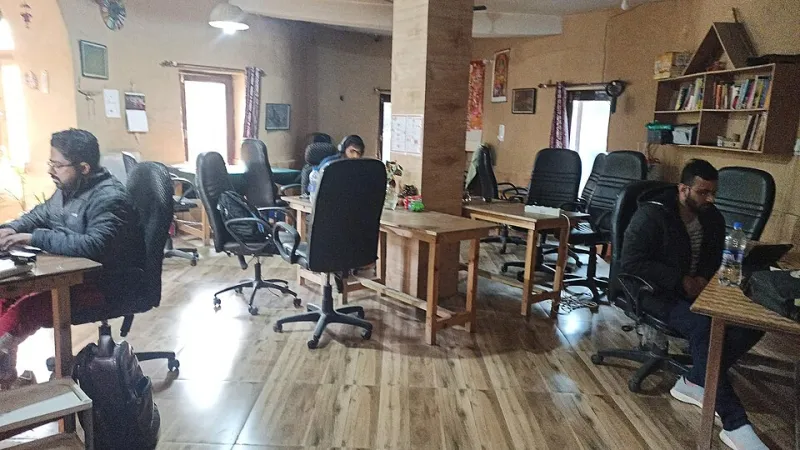
Kobe, specifically, has a small but real network of founders and remote-first operators who've navigated exactly this setup. The city has coworking spaces where you can find other distributed-team builders. There are informal Slack communities and occasional meetups where people who've figured out the hiring paperwork, the banking logistics, and the visa questions are willing to share what they know.
If you're a US founder thinking about this seriously, you're not starting from zero. The infrastructure — both practical and human — already exists.
What You Actually Need to Make This Work
This isn't a strategy for every founder or every business model. A few things need to be true for this to make sense.
First, your work needs to be genuinely location-independent. If your product requires everyone in the same room during crunch time, Kobe isn't your answer. But if you're building software, running a content or media operation, doing anything in fintech or edtech or logistics tech — you're probably fine.
Second, you need to be willing to invest in communication infrastructure. Async tools, good documentation habits, and a genuine commitment to making your Kobe-based hire feel like a full member of the team rather than a remote contractor. Founders who treat this as purely a cost-cutting move tend to get cost-cutting results. Founders who treat it as a strategic expansion tend to get something much more valuable.
Third, you'll need to sort out the legal and employment structure — whether that means using an employer-of-record service, establishing a Japanese entity, or working with a local HR partner. None of this is insurmountable, but it does require a few weeks of homework upfront.
The Competitive Landscape Is Shifting
For most of the last decade, "build your team in a cheaper market" meant Eastern Europe or Southeast Asia. That's still a legitimate path. But Kobe offers something those markets often don't: a stable, developed economy with world-class infrastructure, a highly educated workforce, and a cultural work ethic that is, frankly, legendary.
The founders who are figuring this out now are getting there early. The talent market in Kobe hasn't been picked over yet. The cost advantages are real. And the city itself — livable, affordable by developed-world standards, genuinely beautiful — makes it easy to attract ambitious people who want to work on interesting problems without paying a premium to do it.
If you're building something from scratch and you're tired of watching your hiring budget evaporate before you've shipped version one, it might be worth asking whether your first hire really needs to be in the same zip code as everyone else's.