Why Doing Less in Kobe Makes You Produce More — The Science Behind the Slowdown
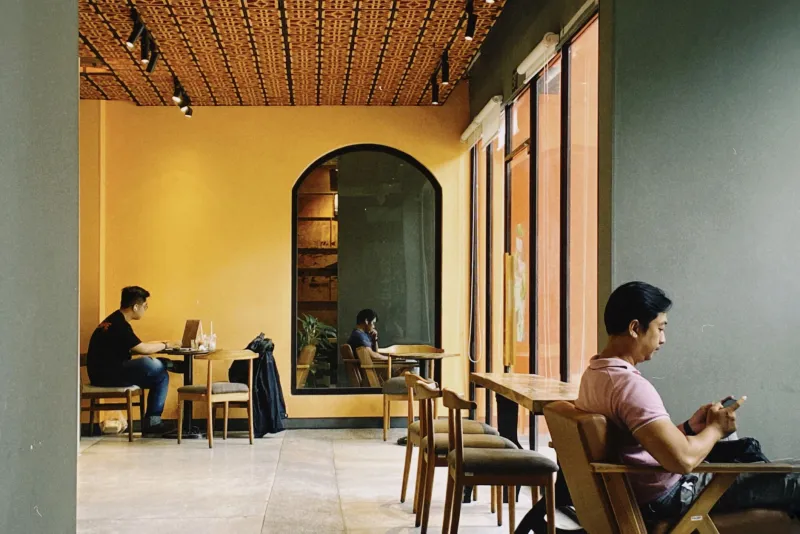
There's a moment almost every American expat describes in their first few weeks in Kobe. You're sitting at a coffee shop in Kitano or maybe a kissaten near Sannomiya, and you realize — nobody around you looks rushed. Nobody's stress-eating a sandwich over a laptop. Nobody's on a Bluetooth call while doing three other things. And instead of feeling productive by comparison, you start to wonder: am I doing this wrong?
Spoiler: you're not. They're not. And the research on how human brains actually generate good work might explain why Kobe's unhurried culture has quietly become one of the most compelling reasons US remote workers and entrepreneurs are relocating here.
The Problem With Always-On
American hustle culture has a core assumption baked in: more input equals more output. More hours, more meetings, more notifications, more context-switching — more productivity. Except that's not what the science says.
Neuroscientists studying decision fatigue have known for years that the brain's prefrontal cortex — the part responsible for complex reasoning, creative problem-solving, and sound judgment — degrades under sustained cognitive load. When you're constantly reacting, you're pulling from a depleted resource. The quality of your decisions, your writing, your code, your strategy — it all suffers.
What restores that resource? Cognitive rest. Predictable routines. Environments with low ambient stress. Sound familiar? That's basically a description of daily life in Kobe.
What Kobe's Pace Actually Looks Like
Kobe isn't slow in the way that feels like nothing's happening. It's a real city — Japan's sixth largest — with a functioning port economy, a serious tech and biomedical sector, and a legitimate startup scene. But it operates without the performative urgency that defines places like New York, San Francisco, or even Tokyo.
Lunch is an actual break. Commutes, if you have them, are short and quiet — the city is compact enough that most people in central wards are within 20 minutes of wherever they need to be. Business culture here values considered responses over instant replies. Showing up to a meeting having actually thought about the agenda is respected. Firing off a half-baked answer in 90 seconds to signal responsiveness is not.
For remote workers still tethered to US clients and US time zones, this creates an interesting structural advantage: your deep work hours happen in the morning, Japan time — when your Slack is silent because your clients are asleep. By the time New York wakes up, you've already put in four or five hours of uninterrupted focused work. Kobe's pace reinforces that structure rather than fighting it.
What Expats Are Actually Experiencing
Talk to Americans who've been in Kobe for more than six months and a pattern emerges. The first few weeks feel strange — almost guilty. You're not context-switching every 11 minutes (the average in a typical American open-plan office, per research from UC Irvine). You're not performing busyness. And then, quietly, the work gets better.
Marcus, a UX consultant from Austin who relocated to Kobe's Nada ward about 18 months ago, put it plainly: "I started delivering better work on fewer hours. My client revision requests dropped. I couldn't figure out what changed until I realized I was actually finishing thinking before I started doing."
That phrase — finishing thinking before starting doing — comes up a lot. Kobe's culture doesn't reward the first answer. It rewards the right one. And spending time in that environment recalibrates how you approach your own work, even when your clients are 13 time zones away.
Jessica, a content strategist originally from Portland, describes a similar shift: "Back home I was addicted to the feeling of being busy. Here, I had to find my self-worth in the actual output. It was uncomfortable at first. Now my output is genuinely better and I work maybe 30% fewer hours."
The Neuroscience of Deliberate Pace
What's happening in the brain during this kind of environmental shift isn't mystical — it's measurable. Research on default mode network activity (the brain's "resting state" processing) shows that periods of mental downtime are when the brain consolidates learning, makes novel connections, and generates insight. Creativity doesn't happen in the sprint. It happens in the spaces between sprints.
Kobe's lifestyle creates those spaces structurally. A walk along the waterfront at Meriken Park. A 20-minute train ride with no agenda. A proper sit-down meal with no screens. These aren't luxuries — they're cognitive inputs that feed higher-quality outputs.
There's also the question of decision load. When your environment is lower-stimulation and more predictable, you spend less mental energy on navigation — physical, social, and logistical. That freed-up capacity goes somewhere. In Kobe, it tends to go into your work.
Practical Ways Kobe's Structure Supports Deep Work
Beyond the ambient pace, Kobe has some concrete structural features that remote workers and entrepreneurs find genuinely useful:
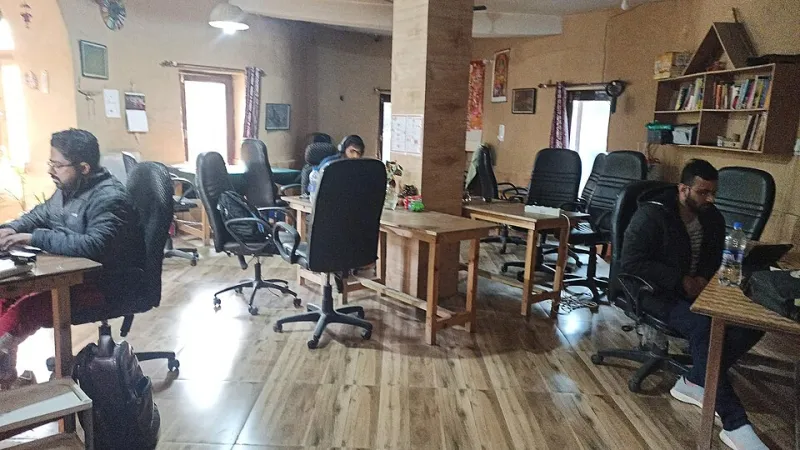
Coworking without the chaos. Kobe's coworking scene — spots like the Innovation Center in Kobe or smaller independent spaces in Motomachi — tends to run quieter than the buzzy, event-heavy spaces common in US cities. You can actually work there.
Walkable neighborhoods with distinct characters. Living in a neighborhood you can walk — whether that's the European-inflected streets of Kitano or the dense urban grid of Chuo ward — means your physical environment is stimulating in a low-stakes way. Walking is one of the most research-backed methods for restoring directed attention.
Food culture that respects the meal. This sounds minor until you realize how many American professionals eat lunch as a guilt-ridden, screen-adjacent activity. In Kobe, sitting down to a proper teishoku set at a neighborhood restaurant for 45 minutes is just what people do. That midday reset has real cognitive value.
The Paradox Isn't Really a Paradox
Once you understand how attention and cognitive resources actually work, the so-called Kobe productivity paradox stops being paradoxical. You're not doing less and somehow magically producing more. You're doing less of the low-value reactive stuff and recovering the mental capacity to do more of the high-value generative stuff.
The city isn't magic. But it does create an environment where the habits that lead to good work — focus, recovery, reflection, deliberate action — are the path of least resistance rather than a constant upstream battle.
If you've been grinding in a high-stimulation city and wondering why your output feels thin despite the hours you're putting in, Kobe's version of slowness might be exactly the upgrade your career needs.