How Kobe Became the City Where Side Projects Actually Get Finished
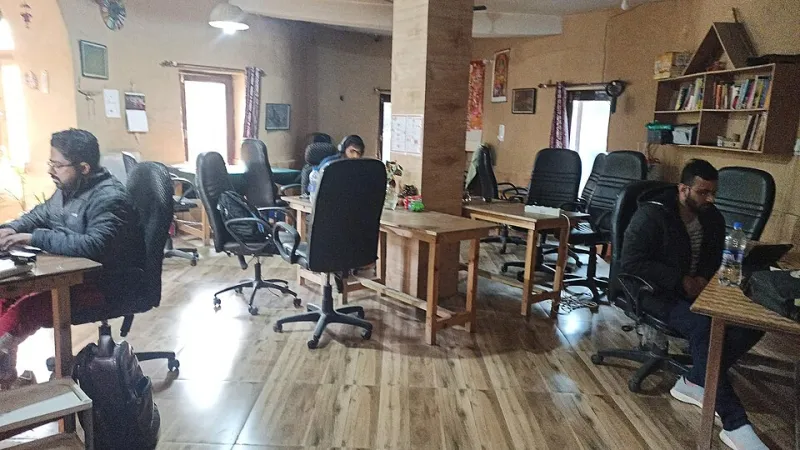
Photo: Workspace India, CC BY-SA 4.0, via Wikimedia Commons
You know the feeling. It's Sunday afternoon in Austin or Chicago or Seattle. You meant to work on the thing — the podcast, the app, the novel, the agency idea you've been sketching in notebooks for two years. Instead, you're stress-scrolling because rent is due Thursday, your social calendar somehow got packed again, and the mental overhead of just existing in an expensive American city has quietly eaten your creative bandwidth alive.
Now picture a different Sunday. You're in Kobe. Your rent is covered. You walked to a co-working space twenty minutes ago, grabbed a coffee for less than two dollars, and you've already been deep in the work for three hours. Nobody is texting you about brunch. The mountain is right there if you need a reset. And the thing you've been putting off for two years? It's starting to look a lot like a real project.
This isn't a fantasy. It's what a growing number of American expats are actually living — and they want to talk about it.
The Financial Pressure That Kills Creative Work
Let's be honest about what stops most side projects before they start: money stress. When your rent alone is eating $2,500 to $3,500 a month — which is just Tuesday in cities like San Francisco, New York, or even Denver these days — every hour you spend on something that isn't immediately generating income feels reckless. Your side project becomes a luxury you can't justify.
Kobe rewrites that math in a hurry. A solid one-bedroom apartment in neighborhoods like Kitano or Nada runs somewhere between $600 and $900 a month. Groceries, transit, and daily life are proportionally affordable. If you're earning a US remote salary, you can cover your expenses comfortably and still have real money — and real time — left over. That leftover space is where creative projects actually live.
Marco, a UX designer from Portland who's been in Kobe for about eighteen months, put it plainly: "In Portland, my side project was a thing I felt guilty about. Here, it's just part of my week. I'm not robbing myself financially to work on it."
Fewer Distractions Is Not the Same as Boring
One thing Americans sometimes worry about before moving to a smaller Japanese city is that life will be too quiet — that they'll go stir-crazy without the constant churn of a major US metro. What most people actually discover is that Kobe is genuinely vibrant, just not loud about it. The food scene is serious. The arts community is real. There's live music, galleries, hiking trails twenty minutes from downtown, and a waterfront that gives you that reset you didn't know you needed.
What Kobe doesn't have is the particular kind of noise that derails creative work: the social pressure, the FOMO, the packed event calendars that make you feel like you're always behind. Life here has a pace that creates breathing room without creating boredom — and that distinction matters enormously when you're trying to build something on the side.
Jessica, who moved from Brooklyn and spent the first year in Kobe writing the novel she'd been "almost starting" for a decade, described it this way: "New York was always giving me reasons to be somewhere else. Kobe gives me reasons to stay home and write. And I mean that in the best possible way."
She finished a full draft in eleven months. She's now working with a literary agent.
The Maker Community You Didn't Expect to Find
Kobe has a quiet but genuinely impressive creative infrastructure. The city's co-working spaces — spots like Kobe Creator's Hub and various shared studios scattered through Sannomiya and the surrounding wards — tend to attract a mix of local entrepreneurs, remote workers, and expats who are all building something. The community is smaller than Tokyo's, which means connections form faster and run deeper.
For expats working on side projects, this is a meaningful advantage. You're not competing for attention in a massive startup ecosystem. You're more likely to end up in a genuine conversation with someone who can actually help you — a developer who wants to collaborate, a designer who has feedback, a founder who's been through it and wants to share what they learned.
David, who launched a SaaS tool for freelance project managers while living in Kobe, credited the community as much as the cost savings: "I met my co-founder at a co-working space here. We were both Americans, both working on side things, and we just started talking. That probably doesn't happen the same way in a bigger city where everyone's already overcommitted."
His tool launched in beta eight months after that first conversation. It now has paying customers.
Nature as a Creative Reset Button
This one sounds soft until you actually experience it. Kobe sits between the Rokko mountain range and Osaka Bay, which means that within twenty to thirty minutes of wherever you're working, you can be on a trail, at the waterfront, or somewhere genuinely quiet and green. For people doing creative work, this geographic fact turns out to be surprisingly functional.
Creative blocks — the kind that make you stare at a blank document or a broken piece of code for hours — respond well to movement and environment change. In cities where that reset requires a car, a long commute, or a pricey day trip, you just don't do it. In Kobe, you do it on a Tuesday afternoon and come back with the solution you couldn't find at your desk.
Multiple expats working on creative projects here mention the mountains or the bay almost reflexively when asked why their productivity improved. It's not mystical. It's just that the city makes the reset easy, and easy resets mean you actually take them.
What Actually Gets Built Here
The range of projects expats have launched or completed while living in Kobe is genuinely varied: podcasts that found real audiences, e-commerce stores that replaced day-job income, creative agencies serving US clients, novels, SaaS tools, design studios, newsletters. The common thread isn't the type of project — it's the fact that they got done.
And the reason they got done is pretty consistent across conversations: lower financial pressure removed the guilt, fewer distractions removed the noise, the community provided the collaboration, and the environment provided the reset. It's not any single factor. It's the combination, and Kobe happens to have all of it stacked in the same place.
If your side project has been living in a tab you never open, it might be worth asking whether the problem is the project — or the city you're trying to build it in.