Already Living in Kobe? Here's Why Remote Employers Are Way More Likely to Hire You

Here's a scenario that plays out more often than you'd think: two candidates, equally qualified, both applying for the same remote role at a US company. One is sitting in a studio apartment in Austin, refreshing their inbox. The other is answering emails from a sunlit café in Kitano, already three months into expat life in Kobe.
Guess which one gets the callback more often?
It's not magic. It's not even that surprising once you understand what remote hiring managers are actually evaluating — and how living in Kobe quietly checks every single one of those boxes.
What Employers Are Really Afraid Of
When a company hires a remote worker who's planning to relocate internationally, there's an invisible risk sitting in the room. Will this person actually make it work? Will they bail after two months because the culture shock hit harder than expected? Will logistics — housing, banking, time zones, connectivity — become a distraction that bleeds into work quality?
These aren't irrational fears. Remote hiring is already a leap of faith. Add international relocation into the mix, and a lot of hiring managers quietly pump the brakes.
But when you're already in Kobe — already paying rent, already embedded in a community, already operating on Japan Standard Time — that risk profile drops to almost nothing. You're not a flight risk. You're not a question mark. You're someone who figured it out, and that reads loud and clear even in a 30-minute Zoom call.
The Timezone Angle Nobody Talks About
Kobe runs on JST, which puts you 13 to 16 hours ahead of the US, depending on the coast. That sounds like a scheduling nightmare on paper. In practice, it's a legitimate competitive advantage — if you know how to frame it.
Remote companies with international clients, distributed teams, or 24-hour operations actively need people who can cover off-hours windows. If you're in Kobe and your US employer has clients in Europe or Asia, you're suddenly the person who can take that early-morning London call without anyone losing sleep. You bridge gaps that people in Denver or Chicago simply can't.
More importantly, demonstrating that you've already built a schedule around this — that you've figured out your overlap hours, your deep-work windows, your async communication rhythm — tells an interviewer that you're operationally self-sufficient. That's a trait companies pay a premium for.
Lifestyle Stability Is a Signal, Not a Perk
There's a version of the remote-worker-abroad narrative that makes hiring managers nervous: the digital nomad who's hopping between hostels, working from unreliable WiFi, chasing sunsets across Southeast Asia. It's a great Instagram story. It's a less great employment pitch.
Kobe is different, and it signals different things.
This is a city with a genuine expat infrastructure — established international neighborhoods, reliable high-speed internet, a functioning healthcare system, an international airport with direct routes, and a cost of living that lets you actually build savings rather than burn through them. When you mention you're living in Kobe, you're not conjuring images of chaos and instability. You're describing a city that has hosted international residents for over 150 years.
That context matters. Interviewers may not consciously articulate it, but the subtext lands: this person has roots. They have a real setup. They're not going anywhere.
The Confidence That Comes From Having Already Figured It Out
There's something that happens to people after they've successfully relocated to another country, set up a life, navigated a new language, and started thriving. They get a certain kind of quiet confidence that's genuinely hard to fake in an interview.
You've already done the hard thing. You solved the logistics puzzle. You built community from scratch. You're operating in a completely different cultural context and pulling it off. That's not nothing — and it shows up in how you present yourself, how you handle ambiguous questions, how you talk about problem-solving.
Kobe in particular has a creative, entrepreneurial energy that tends to rub off on people. The city's history as a port town — a place that has always been a meeting point for different cultures, industries, and ideas — creates an atmosphere where people are comfortable thinking laterally and making things work in unconventional ways. Spend a few months here and you start to absorb some of that.
Interviewers pick up on energy. They pick up on people who seem settled, purposeful, and genuinely enthusiastic about the work rather than just the paycheck. Kobe has a way of putting people in that headspace.
Negotiating From a Position of Actual Leverage
Here's the part people really don't think about: your cost of living in Kobe gives you negotiating flexibility that most US-based candidates simply don't have.
If you're living comfortably on significantly less than your American counterparts need just to cover rent and groceries, you're not desperate. You're not negotiating from a place of financial anxiety. You can afford to be patient, to hold out for the right role, to walk away from lowball offers without flinching.
That psychological freedom translates into how you negotiate. Employers can sense when someone needs the job versus when someone wants it but doesn't need it. The latter negotiates better — and usually lands better packages as a result.
A strong US remote salary that would be middle-of-the-road in San Francisco becomes genuinely substantial in Kobe. That math gives you room to be selective, and selectivity reads as confidence.
How to Actually Use This in Your Interviews
Being in Kobe is an advantage — but only if you communicate it well. A few things worth doing before your next interview:
Own the timezone story. Don't apologize for the time difference. Explain how you've built your schedule around it and why it creates value for a distributed team. Come with specifics.
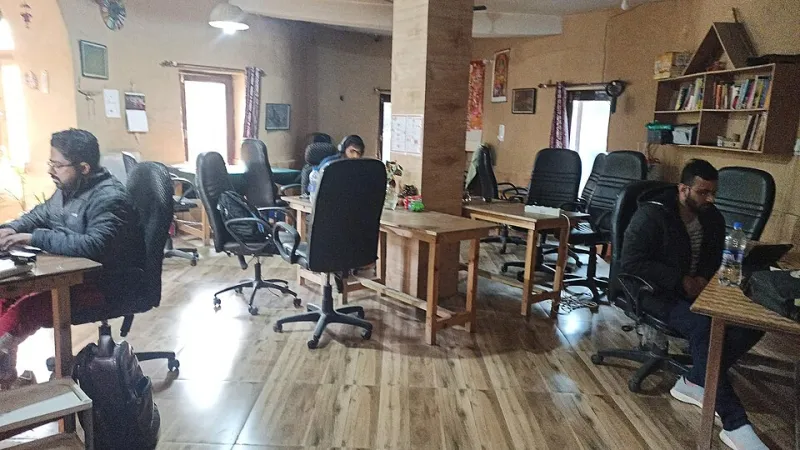
Talk about your setup. Mention your workspace, your internet reliability, your routine. Hiring managers for remote roles want to know you have a real professional environment. You do — tell them about it.
Reference the community. Kobe has a real expat and professional network. If you're plugged into it, say so. It signals that you're engaged, resourceful, and not isolated — all things remote employers care about.
Be specific about Japan. Vague references to "living abroad" don't land the same way as talking specifically about Kobe, about what you've learned navigating life here, about how it's sharpened your communication and adaptability. The specificity is the point.
The Bottom Line
Relocating to Kobe before you've locked down your next remote role might sound counterintuitive. But for a lot of Americans who've made the move, it turned out to be the smartest career decision they made — not despite the uncertainty, but because of how it changed the story they could tell about themselves.
You're not a candidate who's hoping to make remote work work. You're someone who already has.