Working While America Sleeps: How Kobe's Time Zone Became My Biggest Competitive Edge

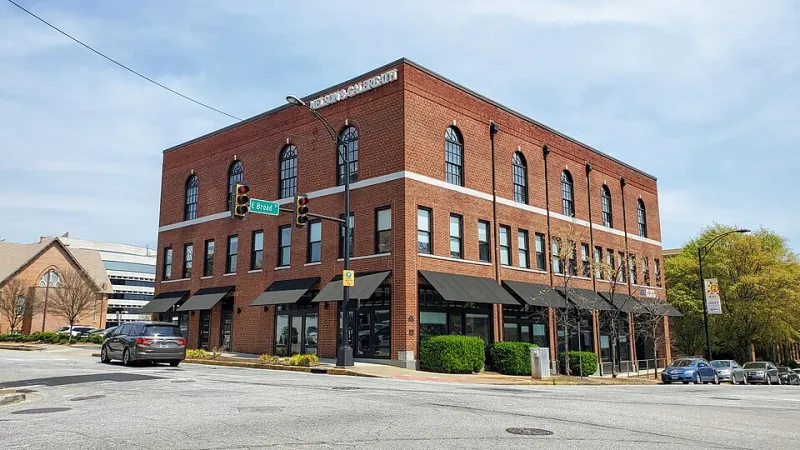
Photo: DominikaMiazek, CC BY-SA 4.0, via Wikimedia Commons
Let's be honest — when most Americans first hear that Kobe, Japan sits 13 to 14 hours ahead of the US East Coast, the first reaction isn't excitement. It's something closer to mild panic. How do I run client calls? What about Slack? Won't I miss everything?
Six months into living here, most remote workers have a completely different answer: the time difference isn't a problem to manage. It's an advantage to exploit.
The Math Nobody Tells You About
Here's the basic arithmetic. When you're sitting down to work at 9 AM in Kobe, it's 8 PM the previous evening in New York. Your inbox is quiet. Slack is dormant. Nobody is pinging you about a deck that needs to be "just tweaked a little." The entire East Coast is winding down for the night, and you have roughly 10 to 12 uninterrupted hours before the first morning emails start trickling in from US time zones.
For anyone who's spent years fighting the tyranny of the open-plan office or the always-on Slack culture, this is genuinely transformative. Cal Newport has written entire books about the value of deep work — the kind of focused, cognitively demanding output that actually moves the needle. In most US cities, carving out four uninterrupted hours is a heroic act. In Kobe, it's just Tuesday morning.
Josh, a UX designer from Portland who relocated to Kobe's Kitano area two years ago, describes it this way: "I used to block my calendar and put on noise-canceling headphones just to get two hours of real design work done. Now I do my best work between 9 AM and 1 PM Kobe time, and nobody even knows I'm alive yet back home. I ship better work because I'm not constantly context-switching."
The Psychology of Async-First Communication
There's a subtler advantage here that goes beyond just having quiet mornings. When you're operating on a significant time offset, you have to communicate asynchronously. You can't rely on quick Slack back-and-forths to resolve every question, because there's nobody on the other end for most of your working day. This forces a discipline that many remote workers say they wish they'd developed years earlier.
You learn to write clearer briefs. You learn to anticipate questions before they're asked. You start leaving detailed Loom videos instead of vague one-liners, because you know a reply isn't coming for eight hours and you'd rather not lose a full day to a miscommunication. Clients and colleagues start noticing — not that you're in Japan, but that your communication has gotten unusually sharp and self-contained.
Mia, a freelance content strategist who moved from Chicago to Kobe's Rokko Island neighborhood, says the async discipline changed how clients perceived her value. "I started getting feedback like 'you're the most organized freelancer I've ever worked with.' I wasn't doing anything revolutionary — I was just forced to be thorough because I couldn't fire off a quick question and expect an answer in five minutes."
Delivering Results Before Breakfast
There's a specific kind of magic that happens when a client in Austin or Boston wakes up to find that the work they asked for yesterday afternoon is already done, polished, and waiting in their inbox. It happens constantly when you're working Kobe hours.
You have their evening and their overnight to work. They go to sleep with a half-formed request, and they wake up to a completed deliverable. It feels — from their end — like you never stop working. The impression you create is one of extraordinary responsiveness and productivity, even if you kept perfectly reasonable nine-to-five hours on your side of the world.
Founders running small agencies or consultancies have taken this even further. Several Kobe-based entrepreneurs describe deliberately positioning their time zone as a feature when pitching clients. "I tell prospects that my team delivers overnight," says one product consultant who asked not to be named. "It's not a gimmick — it's literally true. We work while they sleep. For clients who've been burned by slow turnaround times, it's a genuinely compelling differentiator."
Overlap Windows: When the Worlds Briefly Collide
None of this means you disappear entirely from the US business world. There's a window — roughly 8 PM to 11 PM Kobe time — that overlaps with the US East Coast morning and the West Coast predawn hours. For most remote workers, this is when calls happen, when real-time collaboration occurs, and when the human side of client relationships gets maintained.
The difference is that this window is bounded. It has a clear start and end. You're not available at all hours — you're available for a defined, reasonable slice of the evening, and then you're off. Many Kobe-based remote workers describe this as one of the most underrated lifestyle benefits of the arrangement. The time zone enforces work-life separation in a way that willpower alone never could.
"Back in San Francisco, I was technically done at 6 PM but I'd be checking email until midnight," says Josh. "Here, my 'on-call' window ends at 10 PM and then it's genuinely over, because nobody reasonable expects me to be available at 3 AM their time. The time zone gave me my evenings back."
A Few Real Caveats
This setup isn't frictionless. Industries that run on real-time collaboration — certain trading floors, live event production, anything requiring instant decisions across time zones — will feel the strain more acutely. And if your role requires you to be in daily all-hands meetings timed to New York mornings, those will consistently land at 10 PM or later your time, which gets old quickly.
The professionals who thrive with this arrangement tend to share a few traits: they work in project-based or deliverable-focused roles, they have some control over their own schedules, and they've either already embraced async communication or are willing to build that muscle.
For the right kind of remote worker, though, the Kobe time zone isn't a compromise. It's a structural advantage that compounds over time — better work, stronger reputation, and a rhythm that feels, after a few months, like the only sane way to operate.