The Skills Kobe Builds That Won't Show Up on Any Resume — But Will Change Your Career
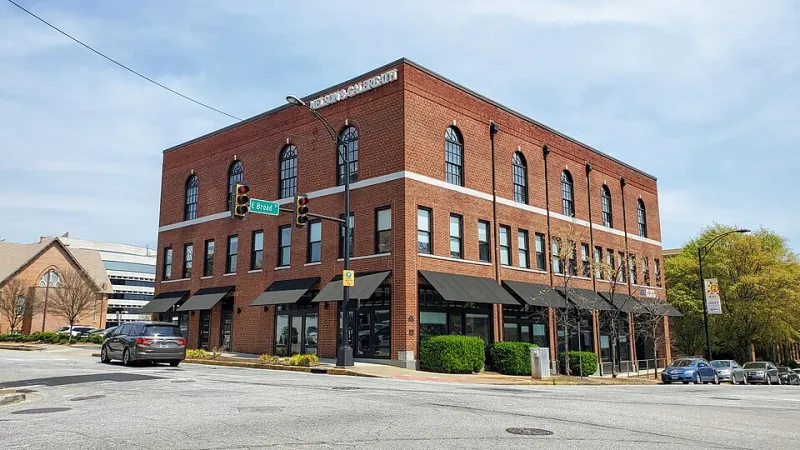
Photo: Upstateherd, CC BY-SA 4.0, via Wikimedia Commons
There's a version of the expat experience that looks great on paper: "lived and worked in Japan" tucked under the education section, maybe a line about "cross-cultural communication" in the skills block. Hiring managers nod politely. Then there's what actually happened to you during those months or years in Kobe — the part that doesn't compress neatly into bullet points but that fundamentally changed how you operate as a professional.
Those two things are not the same. And the second one is far more valuable.
Learning to Function When the System Doesn't Make Sense
Every American who moves to Kobe goes through some version of the same experience: you need to do something routine — open a bank account, navigate city hall paperwork, set up your phone plan — and the process is nothing like what you'd expect. Forms are in Japanese. The workflow is opaque. The assumptions baked into the system don't match your own.
You figure it out anyway. Not because you're especially resourceful, but because you have no choice.
Do this enough times and something shifts. You stop expecting new systems to be intuitive. You develop a tolerance for ambiguity that most US-based professionals never have to build, because American institutions, for all their flaws, tend to be legible to Americans. The ability to stay calm, methodical, and effective when the rules aren't clear is a genuine professional superpower — and Kobe hands it to you whether you asked for it or not.
Tara, a project manager from Seattle who spent three years in Kobe before returning to a senior role at a tech firm, describes it plainly: "I got put on a project that was an absolute mess — unclear requirements, shifting stakeholders, nobody agreed on the process. My manager pulled me aside afterward and said I handled the ambiguity better than anyone she'd seen. I didn't tell her it was because I'd spent two years figuring out Japanese bureaucracy. But that's exactly what it was."
The Language Thing — Even If You Never Become Fluent
Here's something expats don't talk about enough: you don't have to become fluent in Japanese for language acquisition to change you professionally. The attempt to learn a structurally foreign language rewires how you think about communication in ways that persist long after you've stopped conjugating verbs.
Japanese forces you to think about register — who you're speaking to, what level of formality the situation demands, how much you're imposing on someone versus receiving from them. These aren't concepts that English ignores, exactly, but they're not foregrounded the way they are in Japanese. Spending time genuinely grappling with them changes how you write emails, run meetings, and read a room.
Several Kobe expats describe a specific shift in client communication after their time abroad. They became better at calibrating tone. They got more careful about assumptions. They started noticing when a conversation had an undercurrent that the words weren't capturing — and responding to that undercurrent instead of just the surface content.
"My clients started telling me I was unusually easy to work with," says Marcus, a brand consultant from Atlanta who lived in Kobe for two years and now works remotely from there full-time. "I think what changed is that I stopped assuming everyone communicated the way I did. I got more curious and less reactive. That came directly from trying to navigate a culture that doesn't always say the quiet part out loud."
Building Comfort With Being the Outsider
One of the less glamorous but genuinely useful experiences of expat life in Kobe is being visibly, unmistakably foreign in a city that isn't particularly used to it. Kobe has more international history than most Japanese cities — the old Kitano district is full of the former homes of foreign traders — but it's still a place where standing out is a daily reality for most Western expats.
This is uncomfortable at first. Then it becomes normal. Then, almost imperceptibly, it becomes an asset.
Professionals who've spent time as the obvious outsider in a room develop a particular kind of ease with being underestimated, misread, or simply different. They stop needing social camouflage to function. In business contexts — especially for founders pitching to unfamiliar audiences, consultants entering new industries, or anyone who regularly needs to walk into rooms where they don't have automatic credibility — this is quietly enormous.
Danielle, a freelance UX researcher from Boston who moved back to the US after 18 months in Kobe, says she noticed the change most clearly in client pitches. "I used to get rattled when a room felt skeptical. After Kobe, I just... didn't. I'd been the most out-of-place person in the room so many times that a tough audience stopped feeling threatening. I started closing more business, and I think that was a big part of why."
The Soft Skills That Command Hard Money
There's a practical financial dimension to all of this that's worth naming directly. The skills described above — ambiguity tolerance, cross-cultural communication, psychological resilience under uncertainty — are exactly the capabilities that organizations pay premiums for in senior roles, consulting engagements, and leadership positions.
They're also genuinely difficult to develop in a conventional US career trajectory, because that trajectory tends to be optimized for comfort and legibility. You get better at the things your environment asks you to practice. Most American professional environments don't ask you to practice being disoriented, adaptive, and effective without a roadmap.
Kobe does. Repeatedly, and often inconveniently.
The expats who've leveraged this most effectively are the ones who learned to articulate what the experience actually built in them — not just "I lived in Japan" but the specific capabilities that emerged from navigating life in an unfamiliar system. That's a harder pitch, but it's a much more honest and compelling one.
What This Looks Like in Practice
For remote workers staying in Kobe long-term, these skills compound in real time. Every quarter you're here, you're getting better at operating across cultural contexts, communicating without assuming shared frameworks, and staying functional when things don't go according to plan.
For those who eventually return to the US, the skills travel with them. The city doesn't give you a certificate. What it gives you is a professional toolkit that most of your peers simply don't have — and in a job market that increasingly values adaptability over pedigree, that gap matters more than it ever has.