How I Found My People in Kobe Before I Could Order Coffee in Japanese
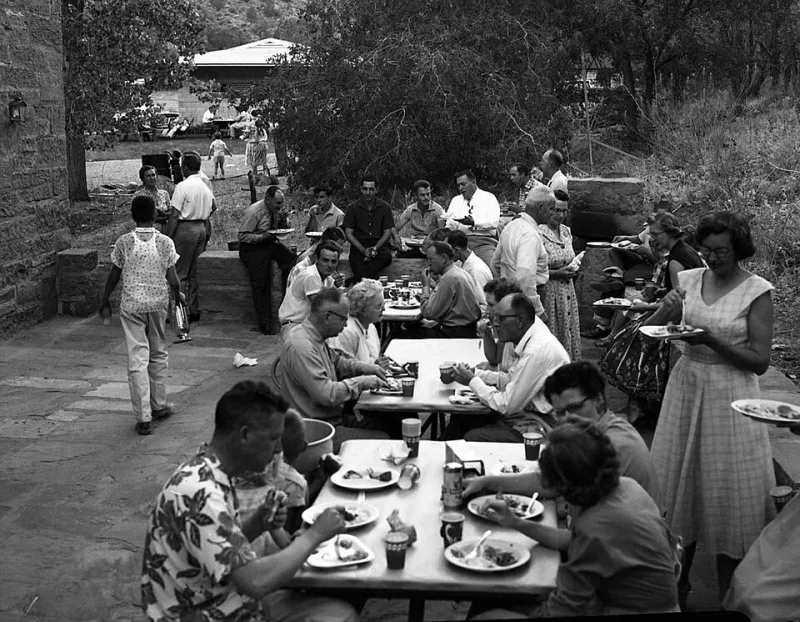
Photo: Carl E. Jepson, Public domain, via Wikimedia Commons
I want to tell you about week three, because nobody warns you about week three.
Weeks one and two in Kobe are a vacation. You're riding the loop line around the harbor, eating sando from the konbini, marveling that your rent is half your Austin mortgage. You're not lonely — you're on an adventure.
Then week three arrives. The novelty wears off, the real work of living begins, and you realize you haven't had a conversation longer than a transaction in eleven days. I sat in a Sannomiya café eavesdropping on a group of friends laughing over coffee and felt a homesickness so specific it had a flavor. If you've moved abroad, you know exactly what I mean.
This article is the playbook I wish I'd had on day one. Ninety days, minimal Japanese, and a social calendar fuller than the one I left behind in the States.
Weeks 1–2: Say Yes to Everything
The golden rule of a soft landing: every invitation gets a yes, and every event gets RSVP'd to before your brain can talk you out of it. I found everything through three channels:
- Meetup.com — surprisingly active in Kobe. Language exchanges at cafés near Sannomiya happen multiple times a week.
- Facebook groups — search "Kobe Expats" and "Kobe International." Unfashionable in the US, essential in Japan.
- The Kobe International Community Center (KICC) — free or cheap events, and staff who speak English and genuinely want to help you plug in.
My first event was a language exchange at a bar in Motomachi. I knew maybe thirty Japanese words. It didn't matter — half the Japanese attendees were there specifically to practice English, and the exchange rate (my broken English-assisted conversation for their patient Japanese lessons) is the oldest friendship currency in the expat world.
Weeks 3–4: The Loneliness Dip, and the Antidote
Here's the counterintuitive part: the cure for week-three loneliness isn't more parties. It's repetition.
Friendship research — the actual kind, from University of Kansas professor Jeffrey Hall — suggests it takes roughly 50 hours together to turn an acquaintance into a friend. Meetups give you one-hour strangers. What builds real friendship is a recurring commitment where you see the same faces weekly.
So in week three, I picked two recurring things:
- A language exchange I attended every single Thursday, same café, same crowd.
- A pickup soccer group that plays Sunday mornings at a park near Shin-Nagata. I'm mediocre at soccer. Nobody cared. I showed up, I got a jersey, I got invited to ramen afterward. That's the whole formula.
Sports clubs are the cheat code in Japan. Running groups along the harbor, hiking clubs that tackle Mt. Rokko on weekends, bouldering gyms in Nada — Japanese sports communities are welcoming to foreigners in a way that's genuinely disarming. You don't need the language; you need to show up.
Weeks 5–8: From Acquaintances to Actual Friends
This is where most expats stall. You know twenty faces and have zero plans on a Saturday. The fix: be the initiator. Americans have an advantage here — we're culturally conditioned to say "we should grab dinner sometime!" So actually say it, with a date attached. Invite the Thursday language-exchange regulars to a weekend hike. Host a potluck in your tiny apartment (Japanese friends will find your enthusiasm charming, and everyone loves seeing a foreigner's apartment).
I also started a weekly English conversation meetup at a community space in Kitano, which sounds like work but is actually a friendship machine — people come to you, grateful for the space, and you become a connector. Connectors never eat alone.
Weeks 9–12: The Kobe Effect
By month three, something shifted that I don't think would've happened in Tokyo or Osaka. I ran into the soccer guy at the grocery store. The Thursday café crowd had become Thursday friends. A Japanese neighbor left vegetables at my door with a handwritten note. Kobe is a city of 1.5 million, but it functions like a collection of villages — Sannomiya, Kitano, Motomachi, HAT — each small enough that you become a regular, a familiar face, a person.
Tokyo is where you can disappear. Kobe is where you get known. That's not sentimentality; it's geography. The expat scene is big enough to find your people and small enough that your people find you.
The Honest Checklist
If you're landing in Kobe soon, here's the compressed version:
- Join two Facebook groups and Meetup before you even fly.
- Attend every event for two weeks, then commit to two recurring ones.
- Pick one sport or physical hobby — it's the fastest integration tool in Japan.
- Initiate. Every time. With specific dates.
- Expect the week-three dip. It's not a sign you made a mistake. It's just week three.
Ninety days after that lonely café moment, I had a Sunday soccer game, a Thursday table, and a neighbor who brings me mikan in winter. I still can't order coffee in fluent Japanese. Turns out that was never the prerequisite.