How a US Remote Salary Becomes a Superpower When You Live in Kobe
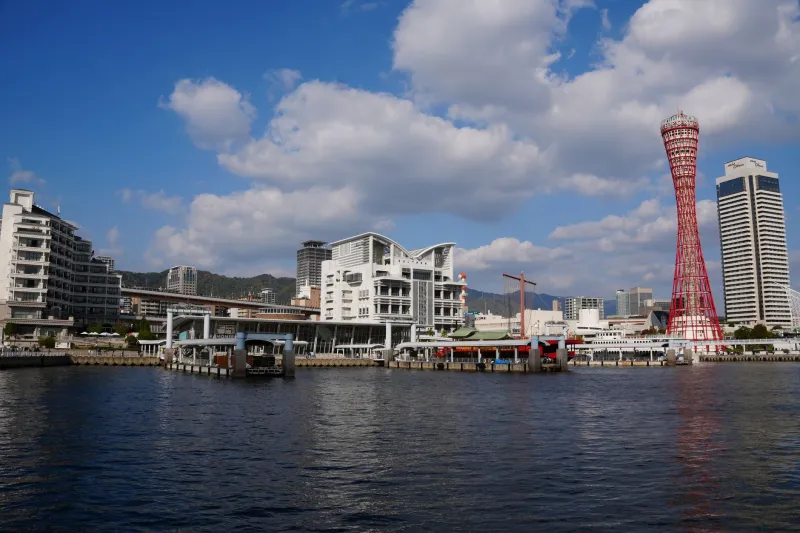
Let's start with a number that might mess with your head a little: the average one-bedroom apartment in San Francisco runs somewhere north of $2,800 a month. In Austin, you're looking at $1,600 to $2,000. In New York? Don't even ask. Now picture a clean, well-located one-bedroom in Kobe's Sannomiya or Kitano area — somewhere between $600 and $900 a month, utilities included in many cases.
That's not a typo. That's Kobe.
For US remote workers earning American salaries while living abroad, this isn't just a budget win — it's a complete restructuring of what money means in your daily life. And once you feel that shift, it's genuinely hard to unsee.
The Raw Numbers, Honestly Laid Out
Let's get specific, because vague promises about "affordable living" don't pay rent.
A furnished one-bedroom apartment in a desirable Kobe neighborhood — think Motomachi, Kitano, or Mikage — typically runs between ¥70,000 and ¥100,000 per month. At current exchange rates, that's roughly $470 to $670. Step up to a two-bedroom with modern finishes and you're still often under $1,000.
Groceries? A week's worth of fresh produce, proteins, and pantry staples from a local supermarket like Gyomu Super or Daiei will run you $40 to $60 — and that's shopping without thinking too hard about it. Eating out at a sit-down restaurant for lunch rarely exceeds $8 to $12 per person, and that includes a drink and often a small side. Compare that to the $18 salads and $6 drip coffees that became a depressing baseline in most US cities.
A monthly transit pass covering the subway and JR lines in Kobe? Around $60. A gym membership at a solid facility? Forty to sixty dollars. A decent bottle of local sake or craft beer from one of Kobe's excellent bottle shops? Under $10.
Run the math on a $70,000 annual US remote salary — roughly $5,800 a month before taxes — and you're looking at a lifestyle in Kobe that would cost three times as much to replicate in a comparable US metro. That's not hyperbole. That's arithmetic.
What Financial Breathing Room Actually Feels Like
Here's the thing nobody talks about enough: it's not just that you spend less. It's that you stop making decisions based on scarcity.
In cities like LA or Chicago, a huge chunk of your mental bandwidth quietly gets consumed by financial anxiety — the background hum of rent due dates, credit card balances, and the nagging awareness that one unexpected expense could derail the month. Even people earning good salaries in expensive US cities often describe feeling stretched, not because they're irresponsible, but because the cost structure of those cities is genuinely punishing.
Kobe removes that hum. When your fixed costs drop by 50 to 60 percent and your income stays the same, you're not just saving money — you're reclaiming cognitive space. And that space tends to show up in surprising ways.
Remote workers who've made the move often describe taking on creative projects they'd shelved, launching freelance offerings they'd been too stressed to develop, or finally building that emergency fund they'd been promising themselves for years. The financial runway Kobe provides isn't just comfortable — it's generative.
The Risk Equation Flips
One of the quieter effects of living cheaply on a solid income is what it does to your relationship with risk.
In an expensive US city, professional risk-taking — pitching a new client, dropping a difficult one, taking a month to develop a new skill, starting a side project — carries real financial stakes. When your burn rate is $4,000 a month, you need that paycheck. Every month. Without fail.
In Kobe, your monthly baseline can comfortably sit at $1,500 to $2,000, including rent, food, transit, and a reasonable social life. Suddenly, you can afford to experiment. You can say no to a client who's draining you. You can spend three months building something new without the anxiety of watching your savings evaporate.
This is what expats mean when they say Kobe changed how they work. It's not that the city has some mystical productivity energy — it's that financial pressure stops dictating every professional decision you make.
Entertainment and Lifestyle: Where Kobe Really Shines
Kobe is a genuinely enjoyable city to live in, and the cost of enjoying it is remarkably low.
A day hike up Mount Rokko — one of the best urban mountain escapes in Japan — costs nothing but the train fare to get there. The city's jazz bars, many of them intimate and decades old, typically charge a modest cover of $5 to $10 with a drink included. Kobe's waterfront, its Chinatown (Nankinmachi), its European-influenced Kitano district — all of it is walkable, accessible, and free to explore.
When you do spend money on experiences — a meal at a proper Kobe beef restaurant, a day trip to Kyoto or Osaka, a sake tasting at a local brewery — those things feel like genuine treats rather than financial decisions you'll second-guess later. In an expensive US city, even casual outings can feel loaded with opportunity cost. In Kobe, they just feel like living.
Long-Term Planning Gets Real
Maybe the most underrated benefit of this purchasing power gap is what it does to your long-term financial picture.
With lower monthly expenses, saving 30 to 40 percent of a US remote income is realistic — not aspirational, actually realistic. That's the kind of savings rate that compounds meaningfully over time, funds extended travel, builds investment accounts, or accelerates a timeline toward financial independence that would take twice as long to reach from an expensive US metro.
Some expats in Kobe describe it as living in two financial timelines simultaneously: spending at a level that feels generous and comfortable in the present while building toward future goals at a pace they couldn't match back home. That's a rare combination, and it doesn't happen by accident — it happens because Kobe's cost structure makes it structurally possible.
The Honest Caveats
Fairness requires a few notes of reality. Initial setup costs — finding an apartment, paying key money and deposits, furnishing a place, navigating the bureaucracy of getting settled — can run $2,000 to $4,000 upfront. International health insurance or enrollment in Japan's national health system adds a monthly cost worth factoring in. And if you have financial obligations back in the US — student loans, family support, a mortgage you're holding onto — those don't disappear.
But for a US remote worker with a reasonable income and the flexibility to relocate, Kobe's cost-of-living advantage is substantial, real, and sustainable. This isn't a temporary arbitrage that closes after a few months. It's a durable structural difference between what life costs here and what it costs in the cities most Americans are grinding through right now.
The math is straightforward. What you do with the freedom it creates — that part's up to you.