Why Returning to America After Kobe Feels Like You Moved to a Foreign Country
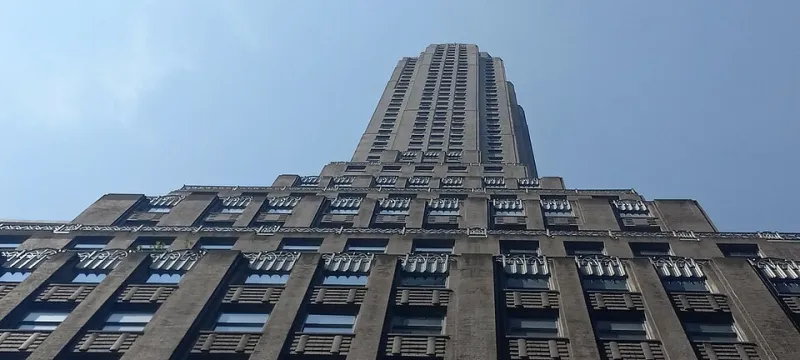
Photo: Kidfly182, CC BY 4.0, via Wikimedia Commons
You spend months preparing to move to Kobe. You research neighborhoods, stress about the visa, Google "how to open a Japanese bank account" at 2 a.m. You brace for culture shock.
What nobody tells you is that the harder adjustment happens on the return flight.
Reverse culture shock is real, it's documented, and in the case of Kobe specifically, it hits in ways that feel oddly specific—not just vague disorientation, but concrete, almost embarrassing friction with things you used to do on autopilot. The apartment feels too big. The grocery store feels aggressive. Your old friends seem slightly harder to reach, not because they've changed, but because you have.
Here's what's actually happening—and why it makes total sense.
Your Brain Recalibrated Around a Different City
Kobe is a mid-sized Japanese city with excellent public transit, walkable neighborhoods, and a pace that—compared to Tokyo—feels almost leisurely. But compared to most American metros, it's extraordinarily efficient. Trains run on time to the minute. Convenience stores are genuinely convenient. The distance between where you live and where you need to be is usually measured in a pleasant 10-minute walk, not a 40-minute freeway slog.
After six months or a year of this, your nervous system recalibrates. You stop factoring in commute buffer time. You stop dreading errands. You start building your day around the assumption that logistics will just... work.
Then you land in Phoenix or Atlanta or Columbus, and the first time you need to drive 25 minutes to return a package, something in your chest tightens. It's not nostalgia exactly. It's closer to the feeling of using a slow internet connection after years of fiber—a low-grade, constant friction you'd forgotten was optional.
The Space Problem Nobody Anticipates
American apartments are big. We know this intellectually. But after living in a well-designed Kobe apartment where every square foot has a purpose, that bigness starts to feel less like luxury and more like emptiness.
Japanese residential design tends to prioritize function over square footage. Closets are deep and intentional. Kitchens are compact but efficient. Rooms serve clear purposes. You adapt to this quickly, and in adapting, you start to notice how much American living space is essentially decorative—rooms that exist to hold furniture that exists to fill rooms.
Returning expats frequently report feeling unsettled in larger spaces, not because they're ungrateful, but because the extra room highlights how much stuff you need to acquire to make it feel like home again. That re-acquisition process—the IKEA runs, the Amazon orders—can feel hollow in a way that's hard to articulate to people who haven't experienced the contrast.
Social Norms That Used to Feel Normal Now Feel Transactional
This one's subtle, and it's the one most likely to make you feel like you're being unfair to people you genuinely love.
Kobe, like most of Japan, has a particular social texture. Interactions with strangers—at the konbini, on the train, in a restaurant—tend to be courteous, low-pressure, and bounded. Nobody's performing friendliness. Nobody's asking how your day is going as a conversational formality. There's a kind of social honesty to it that, once you've absorbed it, makes certain American social scripts feel exhausting.
The relentless "How are you?" "I'm great, how are you?" exchange that functions as punctuation rather than inquiry. The networking conversation that's dressed up as genuine connection. The customer service enthusiasm that's clearly mandatory rather than felt.
None of this is new. You grew up in it. But after time away, you notice it in a way you didn't before, and that noticing creates a low-grade social fatigue that can make you seem distant to people who haven't changed at all.
Car Culture Is Its Own Re-Entry Process
If you lived in Kobe without a car—which is entirely possible and genuinely pleasant—getting back behind the wheel is its own adjustment. Not because you forget how to drive, but because driving everywhere restructures your relationship to time, spontaneity, and physical movement in ways that feel newly oppressive.
In Kobe, a spontaneous decision to go somewhere is low-stakes. You walk to the station, you go. In most American cities, a spontaneous decision involves finding your keys, checking traffic, figuring out parking, and adding 30 minutes of dead time on each end. The friction isn't enormous, but it's cumulative, and after living without it, you feel it.
Expats who return to car-dependent metros often describe this as one of the most persistent sources of low-grade frustration—not dramatic enough to complain about, but present enough to color the whole experience of daily life.
What to Actually Do With This
First: give yourself permission to acknowledge that the adjustment is real. Reverse culture shock gets dismissed because it sounds like complaining about coming home, which feels ungrateful. It's not. It's a normal neurological response to environmental change.
Second: identify what you specifically miss and find proxies. Walkability? Research your city's most pedestrian-friendly neighborhoods before you commit to a lease. The social texture of Japanese public life? Seek out spaces—farmers markets, neighborhood associations, local coffee shops with regulars—where interaction has some of that low-key consistency.
Third: let Kobe change how you make decisions going forward. The recalibration isn't a bug. The fact that you now notice inefficiency, value intentional design, and crave genuine over performed connection—those are useful upgrades. They'll shape where you choose to live, how you structure your time, and what you're willing to tolerate.
The disorientation of coming home is really just evidence of how much Kobe got into you. That's not a problem to solve. It's information to use.