Goodbye Gridlock: How a 12-Minute Train Ride Quietly Rebuilds Your Whole Day
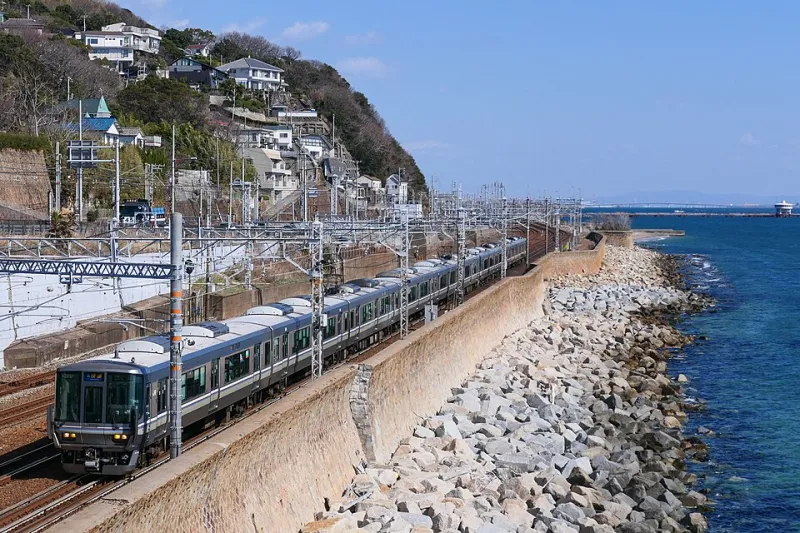
Photo: MaedaAkihiko, CC BY-SA 4.0, via Wikimedia Commons
Ask a group of American transplants in Kobe what shocked them most about daily life here, and nobody says the food or the trains running on time. They say something like: "I got my mornings back."
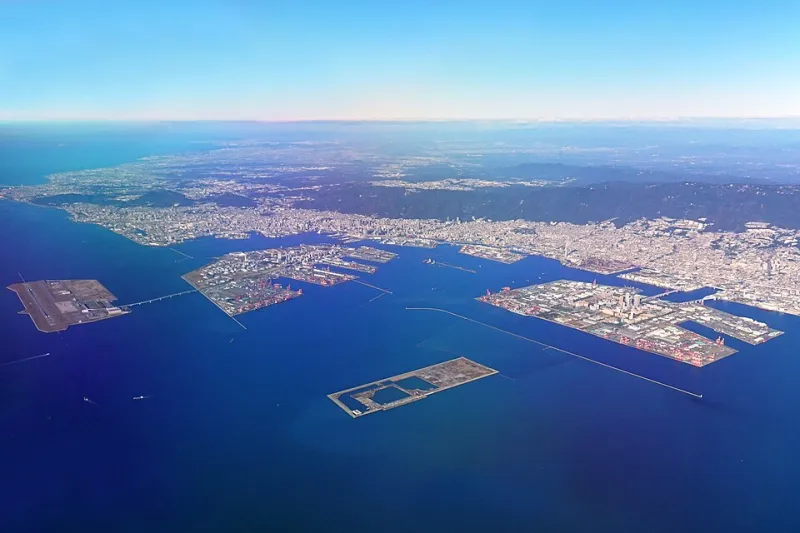
Back in the States, the commute is often the hidden third job. In Los Angeles, Houston, or Atlanta, an hour-plus each way in stop-and-go traffic is just... normal. You white-knuckle the steering wheel, mainline gas station coffee, and arrive at work already exhausted. In Kobe, that entire ritual dissolves. The city stretches maybe 30 kilometers along a narrow ribbon between the Rokko mountains and Osaka Bay, and its rail lines — JR, Hankyu, Hanshin, the Seishin-Yamate subway — run like clockwork through it.
For most residents, door to desk is 10 to 20 minutes. Not because they're lucky. Because the city is built that way.
What a Commute Actually Costs You
Researchers have been sounding the alarm on long commutes for years. Studies consistently link them to higher rates of anxiety, worse sleep, less exercise, and lower relationship satisfaction — one well-known Swedish study even found that couples where one partner commuted 45 minutes or more divorced at higher rates. Americans spend an average of just over an hour a day commuting. That's 13 waking days a year, spent in traffic, alone, stressed.
Now subtract that. That's the Kobe math.
Marcus, a 38-year-old UX designer from Denver who moved to Chuo Ward in 2022, put it bluntly: "My commute in Colorado was 75 minutes each way. Here it's a nine-minute walk to Sannomiya, six minutes on the train, and I'm at my coworking space. I genuinely didn't know what to do with the time at first. Then I realized I could eat breakfast sitting down. Like, at a table. Every day."
The Reclaimed Hour: Where Does It Go?
This is where it gets interesting. Everyone assumes the freed-up time goes to work. Mostly, it doesn't — and that's the point.
Spend a morning at Meriken Park around 7 a.m. and you'll spot them: expats in running shoes, walking the harbor loop before opening their laptops. Others use the time for Japanese study on the train (a 12-minute ride is exactly one Anki deck's worth of flashcards). Some just... sit. The concept of commuting without tension — reading a book, staring out at the water instead of brake lights — is a genuinely novel experience for most Americans.
One remote worker from Chicago told us she uses her "old commute energy" as a hard boundary: she walks to the station and back at the start and end of her workday, a fake commute that marks when work begins and ends. "The walk is my commute replacement," she says. "Ten minutes to the harbor and back. It's become the ritual that keeps me sane."
The Housing Ripple Effect
Here's the practical takeaway for anyone planning a move: Kobe's transit setup changes how you should shop for housing. In most US cities, you pick a neighborhood and accept a brutal drive. In Kobe, you can prioritize what actually matters — light, size, budget, atmosphere — because almost every neighborhood is transit-accessible.
Living in Sannomiya puts you at the crossroads of everything, with three major stations within a few minutes' walk. Out in Higashinada or Okamoto, you're still under 15 minutes from downtown on the Hankyu line, with quieter streets and cheaper rent. Even Nagata, one of the most affordable wards, is a straight shot into the city center.
The real question isn't "how bad will my commute be?" It's "what do I want to see out my window?" In Kobe, that's a luxury most American cities simply can't offer.
The Part Nobody Warns You About
There's an adjustment, and it cuts the other way. Expats who've been here a while admit they've become transit snobs. A three-train transfer feels like an ordeal. A delayed train — and they do happen, maybe twice a year — becomes a genuine event worth texting friends about.
More than one returnee has told us the hardest part of moving back to the US wasn't the culture shock. It was getting back in the car.
If you're weighing a move to Kobe and the commute seems like a small line item in your decision, don't underestimate it. It's not a small thing. For a lot of us, it turned out to be the whole thing.