Why Kobe Might Be the Antidote to the Burnout You Didn't Know Was Coming
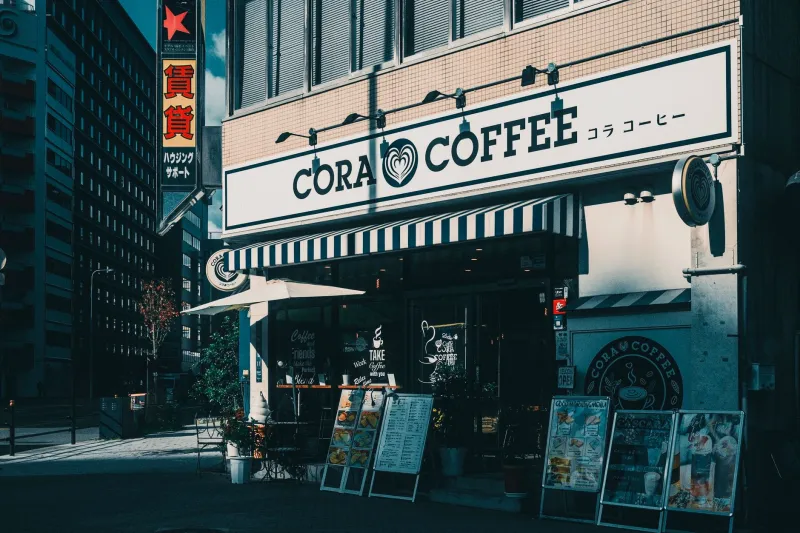
Let's be honest about something. When most Americans picture moving abroad for work, they imagine one of two things: either the high-octane chaos of Tokyo or some sleepy village where nothing gets done. Kobe doesn't fit either story. And that's exactly why it works.
For the growing number of remote workers, freelancers, and career-changers who've relocated here, Kobe occupies this surprisingly rare middle ground — a real city with real infrastructure, a real economy, and a real social scene, but without the ambient pressure that quietly grinds people down in places like San Francisco, New York, or even Tokyo. That pressure has a name. You probably know it. Burnout.
Burnout Isn't a Personality Flaw — It's an Environmental Response
Here's the thing that gets missed in most burnout conversations: it's not really about how hard you work. Research published by the American Psychological Association consistently points to chronic environmental stressors — commute times, cost-of-living anxiety, social isolation, and the relentless sense that you're always slightly behind — as the primary drivers of long-term mental health deterioration in urban professionals.
San Francisco scores high on almost every one of those factors. So does Tokyo, despite its cultural reputation for order and efficiency. The cost of a one-bedroom apartment in either city isn't just a financial burden — it's a psychological one. When a significant chunk of your income disappears into rent before you've bought a single meal, the margin for error in your life shrinks to almost nothing. That margin, it turns out, is where mental health lives.
Kobe changes the math.
"When I moved here from the Bay Area, the first thing I noticed wasn't the food or the scenery," says Marcus, a UX designer who's been based in Kobe for three years. "It was that I stopped doing that thing where I calculated my hourly rate in my head every time I sat down to watch a movie. The financial pressure just... loosened. And my brain followed."
The Science of Pace-of-Life Stress (And Why Kobe Scores Differently)
Psychologists have actually studied what they call "pace-of-life" — the measurable speed at which people in a given city walk, talk, make transactions, and operate. High pace-of-life cities correlate with higher rates of cardiovascular disease, anxiety disorders, and — yes — occupational burnout.
Kobe isn't slow. Don't misread this. It's a functioning port city with a sophisticated business culture, excellent transit, and a population that takes work seriously. But it operates at a human scale. The commutes are shorter. The crowds are thinner. The social expectation to be on every single moment is quieter.
Dr. Yumi Tanaka, a licensed therapist in Kobe who works with a mixed client base of Japanese professionals and foreign residents, describes it this way: "Many of my expat clients come here already depleted. What Kobe offers is not a vacation — it's a sustainable baseline. The city doesn't demand performance from you just to exist in it."
That distinction — between a city that demands performance and one that simply allows it — is harder to quantify but impossible to ignore once you've felt it.
The Cost-of-Living Buffer Is Also a Mental Health Buffer
We've covered the numbers elsewhere on this site, but it's worth connecting the dots here specifically. When your rent is manageable, your grocery bill is reasonable, and you're not white-knuckling every bank notification, your nervous system gets to downregulate. Chronically elevated cortisol — the stress hormone — is directly linked to anxiety, poor sleep, impaired decision-making, and reduced creativity. These are not soft, feel-good concerns. They're the actual mechanisms by which financial pressure destroys professional performance.
The expats we talked to describe a consistent pattern: within three to six months of arriving in Kobe, they sleep better, feel more creatively engaged with their work, and report fewer "Sunday scaries" — that dread that creeps in at the end of the weekend when the week ahead feels like a threat.
"I was a mess in Seattle," admits Priya, a content strategist who relocated two years ago. "Not in a dramatic way — just that low-grade, constant feeling that I was one bad month away from catastrophe. Here, I have a cushion. And having a cushion means I can actually think clearly."
The Expat Community Factor: Why Connection Here Hits Different
Isolation is one of burnout's most reliable accelerants. And ironically, you can be deeply isolated in a city of eight million people — as anyone who's spent a few years in a major metro without finding their people can tell you.
Kobe's expat community is smaller than Tokyo's, and that turns out to be an asset. People actually know each other. There are regular meetups, shared workspaces where faces become familiar, and a general culture among foreign residents of looking out for newcomers. When you're not starting from scratch socially every six months — when you have actual relationships with people who understand the particular experience of building a life abroad — the psychological load of expat life gets significantly lighter.
Marcus puts it plainly: "In Tokyo, I knew a lot of people. In Kobe, I have friends. There's a difference."
What This Doesn't Mean
Let's be clear about what we're not saying. Kobe is not a cure for clinical depression, anxiety disorders, or any serious mental health condition. Moving cities doesn't erase the work that therapy, medication, and genuine self-care require. And the transition itself — visa logistics, language barriers, building a new professional network — comes with its own stressors that shouldn't be romanticized away.
What Kobe offers is structural support for mental wellness: lower financial pressure, a manageable pace, genuine community, and an environment that doesn't treat your nervous system as a renewable resource to be extracted.
For a lot of Americans who've spent their careers in high-pressure hubs — who've normalized the grinding anxiety of just keeping up — that structural shift is more powerful than they expect.
The Quiet Advantage
The expats who thrive here tend to describe a similar realization: they didn't know how tired they were until they stopped being tired. The burnout they were managing in their previous city wasn't dramatic. It was ambient. It was the background noise of a life lived at a pace that didn't quite fit human biology.
Kobe turns that noise down. Not to silence — to something closer to the right volume.
And for a lot of people, that's the thing that finally lets them do their best work.