When the Clock Stops Mattering: How Kobe's Round-the-Clock Culture Rewires Remote Workers
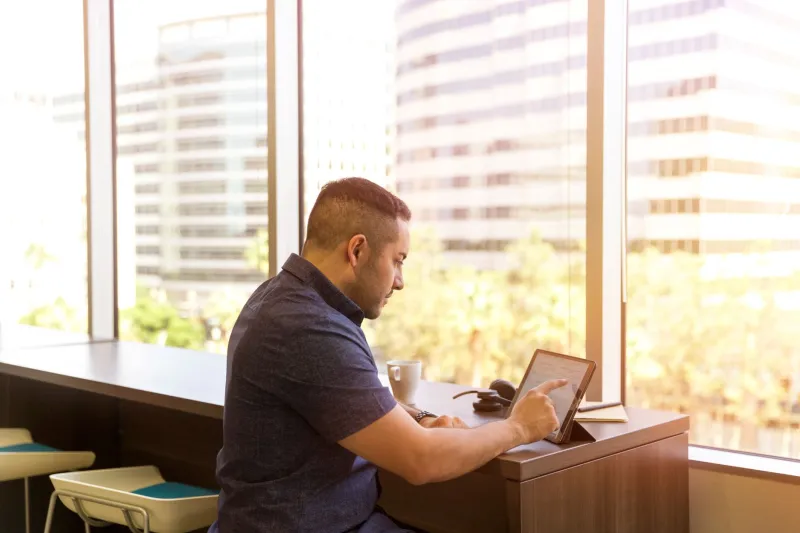
It's 3:17 in the morning. Marcus, a UX consultant from Portland, is sitting inside a warmly lit cafe in Sannomiya, halfway through his second pour-over, sketching wireframes on a tablet while a jazz playlist drifts quietly from a speaker behind the counter. Outside, the city hums. A convenience store across the street is fully staffed. A ramen shop two doors down still has customers. Nobody thinks this is strange.
In the US, this scene would be almost impossible. Most coffee shops close by 9 PM. The ones that stay open late feel like holdouts, not habits. But in Kobe, the city's infrastructure simply doesn't acknowledge the idea that productivity has a curfew — and for remote workers who've relocated here, that changes everything.
The US Work Clock Is More of a Cage Than You Think
Back home, most Americans operate on a schedule that's been handed to them by circumstance. Coffee shops open at 7, close at 8. Coworking spaces follow a similar rhythm. Lunch meetings, afternoon calls, evening wind-downs — the structure isn't chosen, it's inherited.
For remote workers, this creates an invisible pressure. Even without a boss watching over your shoulder, the environment nudges you toward conventional hours. When the cafe closes, you go home. When the neighborhood quiets down, you feel like you should, too.
Kobe dismantles that nudge entirely.
The city has a well-established culture of late-night accessibility. Convenience stores like FamilyMart and Lawson are fully operational around the clock, stocked with hot food, decent coffee, and even basic office supplies. A number of cafes — particularly in Kitano, around Motomachi, and in the quieter pockets of Nada Ward — stay open well past midnight. Coworking spaces increasingly offer 24-hour access tiers. The city's transit system runs late, and the general social tolerance for people being out and working at odd hours is remarkably high.
For remote workers, this isn't just convenient. It's cognitively liberating.
Productivity Isn't a Time of Day — It's a Condition
Ask any remote worker about their best creative hours and you'll rarely hear "10 AM to noon." The answers tend to be stranger: 6 PM after a walk, 11 PM after dinner, 4 AM before the world wakes up. Deep work, for most knowledge workers, is less about the clock and more about a specific mental state — focused, unhurried, free from interruption.
Kobe's 24-hour culture creates the conditions for that state at any hour.
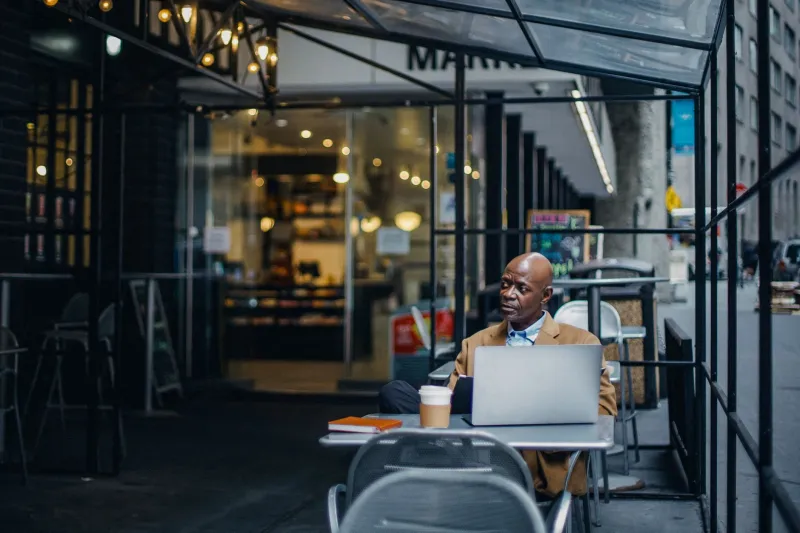
Jenna, a content strategist from Austin who relocated to Kobe's Chuo Ward about 18 months ago, describes it this way: "I always knew I worked better at night, but in Texas I had nowhere to go. I'd be sitting in my apartment at midnight feeling vaguely guilty, like I was doing something weird. Here, I just... go to a cafe. There are other people there. The barista doesn't look at me like I'm a vampire. It normalized something I'd been fighting for years."
That normalization matters more than it sounds. Psychological research consistently shows that environmental cues shape behavior. When your surroundings signal that it's okay to be working — that there are other humans around, that establishments are open and welcoming — your brain relaxes into focus more easily. The guilt dissolves. The friction disappears.
The Creativity Window Nobody Talks About
There's a specific kind of thinking that happens in the late-night hours that's genuinely different from daytime cognition. It's not just that it's quieter. It's that the mental noise — the emails, the Slack pings, the ambient anxiety of being "on" — has faded. The prefrontal cortex, responsible for self-editing and social filtering, is slightly less dominant. Ideas that would get talked out of existence in a morning meeting have room to breathe.
Several American professionals in Kobe describe stumbling into this window accidentally and then deliberately building their schedules around it.
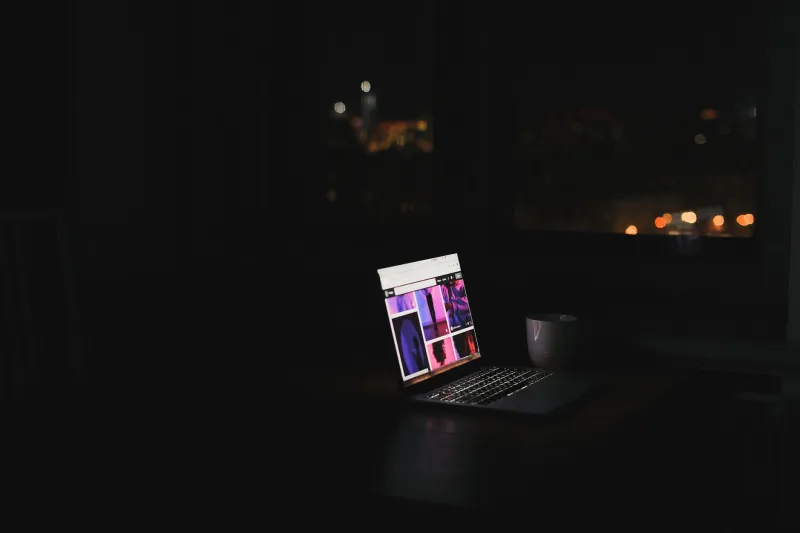
David, a software developer from Chicago who now works for a US-based startup remotely, put it bluntly: "My best architecture decisions happen between 1 and 4 AM. I've accepted that. The difference in Kobe is that I can act on those decisions immediately — go to a cafe, get a coffee, open my laptop, and just work. I'm not fighting the city to do it."
He's also quick to note that this doesn't mean abandoning all structure. "I still sleep. I still have morning calls with my team back in the States. But I've stopped pretending my brain peaks at 10 AM, and Kobe let me stop pretending."
The Work-Life Boundary Question
Fair warning: this kind of freedom isn't automatically healthy. The same flexibility that lets you work at 3 AM can also blur the line between "I'm maximizing my creative hours" and "I've lost all sense of when to stop."
It's a real tension that expats here talk about honestly. When the city never closes and your office is wherever your laptop is, the psychological boundary between work and rest requires more intentional maintenance, not less.
Jenna, the content strategist, says she had to build new rituals to compensate. "I have a rule: I leave the cafe by 4 AM no matter what. I walk home, I make tea, I read something non-work related. The city will always be open. I have to be the one who closes."
That's probably the most important thing to understand about Kobe's 24-hour culture: it offers options, not prescriptions. The infrastructure is there to support whatever rhythm works for you — but you still have to find that rhythm yourself.
What This Actually Looks Like Day-to-Day
For most remote workers who've embraced Kobe's nocturnal infrastructure, the practical shift looks something like this: mornings become lighter, used for admin tasks, emails, and calls with US-based teams operating on the other side of the world. Afternoons are flexible — a walk up toward the Kitano hillside, a long lunch, some errands. Then late evening through the early hours becomes the deep work block, spent in a cafe or at home, with the city quietly confirming that this is a perfectly acceptable way to exist.
It's not for everyone. If you're a natural early riser who does your best thinking at sunrise, Kobe will support that too — the convenience stores are just as well-stocked at 6 AM. But for the substantial portion of remote workers who've always suspected their best hours were unconventional, this city offers something rare: an environment that doesn't fight them on it.
Back at the cafe in Sannomiya, Marcus finishes his wireframe, closes his tablet, and orders one more coffee. It's almost 4 AM. The barista doesn't blink. Outside, the city keeps going.
Some places close. Kobe just keeps the light on.